Showing posts with label Travel Wallpapers. Show all posts

Wednesday, June 8, 2011

UK Car Rentals – How To Book Cheap


The world is now our oyster and traveling across continents is something that does not give people jitters anymore. And therefore visiting the best holiday destinations or exploring the virgin locales must feature high on your to-do list during the holidays. Once you set foot on your holiday land, you would want to navigate it easily and that is precisely why you have to make sure that after a long flight, the rest of your journey is also planned well. The best way to do this is to hire a car that will be waiting to pick you up just outside the airport. The car will also be your companion when you visit the must-sees of the place and soak in its culture.
However, there are a few things that you need to take note of while renting a car during your holiday. A well arranged holiday is a pretty expensive affair and therefore you will not want the car rental cost to burn a hole in your pocket. This is exactly where cheap car hire comes into the picture. Renting the right (and cheap) car will allow you to make your personal travel itinerary, enjoy the freedom of travel and soak in the joy of being wherever you want to be, unbounded.
If you are looking for cheap car hire, you must get in touch with the car rental companies and book a car well in advance. Many rental companies, especially the reputed multi-national ones allow their customers to hire cars at slashed rates if you book in advance. If your lady luck shines, you will be able to get a discount of as high as ten percent. If you have a long holiday in mind and need the rental car for a long period, booking in advance will enable you to get a very economical deal.
With so many car rental companies up against one another in the market, comparing them might leave you in a quandary. The best way to gauge the performance of a car rental company is to compare its prices against the services it offers. However, always remember that your good experience price must be balanced against the availability of vehicles and services. Most car rental companies calculate the prices on the hours the car is rented for, the mileage expected and the type of car hired. Therefore taking into account a rental company’s daily rates, the kinds of cars it can offer and its mileage restrictions will help you to reach a sensible decision.

Tuesday, June 7, 2011

Komodo National Park, Indonesia


Komodo National Park, Indonesia


Komodo National Park lies in the Wallacea Region of Indonesia, identified by WWF and Conservation International as a global conservation priority area. The Park is located between the islands of Sumbawa and Flores at the border of the Nusa Tenggara Timur (NTT) and Nusa Tenggara Barat (NTP) provinces. It includes three major islands, Komodo, Rinca and Padar, and numerous smaller islands together totaling 603 km2 of land. The total size of Komodo National Park is presently 1,817 km2. Proposed extensions of 25 km2 of land (Banta Island) and 479 km2 of marine waters would bring the total surface area up to 2,321 km2. (Click on the map to enlarge - 70kB)


Komodo National Park was established in 1980 and was declared a World Heritage Site and a Man and Biosphere Reserve by UNESCO in 1986. The park was initially established to conserve the unique Komodo dragon (Varanus komodoensis), first discovered by the scientific world in 1911 by J.K.H. Van Steyn. Since then conservation goals have expanded to protecting its entire biodiversity, both marine and terrestrial.

The majority of the people in and around the Park are fishermen originally from Bima (Sumbawa), Manggarai, South Flores, and South Sulawesi. Those from South Sulawesi are from the Suku Bajau or Bugis ethnic groups. The Suku Bajau were originally nomadic and moved from location to location in the region of Sulawesi, Nusa Tenggara and Maluku, to make their livelihoods. Descendents of the original people of Komodo, the Ata Modo, still live in Komodo, but there are no pure blood people left and their culture and language is slowly being integrated with the recent migrants.

Little is known of the early history of the Komodo islanders. They were subjects of the Sultanate of Bima, although the island’s remoteness from Bima meant its affairs were probably little troubled by the Sultanate other than by occasional demand for tribute.

There are presently almost 4,000 inhabitants living within the park spread out over four settlements (Komodo, Rinca, Kerora, and Papagaran). All villages existed prior to 1980 before the area was declared a national park. In 1928 there were only 30 people living in Komodo Village, and approximately 250 people on Rinca Island in 1930. The population increased rapidly, and by 1999, there were 281 families numbering 1,169 people on Komodo, meaning that the local population had increased exponentially. Komodo Village has had the highest population increase of the villages within the Park, mostly due to migration by people from Sape, Manggarai, Madura, and South Sulawesi. The number of buildings in Kampung Komodo has increased rapidly from 30 houses in 1958, to 194 houses in 1994, and 270 houses in 2000. Papagaran village is similar in size, with 258 families totaling 1,078 people. As of 1999, Rinca’s population was 835, and Kerora's population was 185 people. The total population currently living in the Park is 3,267 people, while 16,816 people live in the area immediately surrounding the Park.

The average level of education in the villages of Komodo National Park is grade four of elementary school. There is an elementary school located in each of the villages, but new students are not recruited each year. On average, each village has four classes and four teachers. Most of the children from the small islands in the Kecamatan Komodo (Komodo, Rinca, Kerora, Papagaran, Mesa) do not finish elementary school. Less than 10% of those which do graduate from elementary school will continue to high school since the major economic opportunity (fishing) does not require further education. Children must be sent to Labuan Bajo to attend high school, but this is rarely done in fishermen’s families.

Most of the villages located in and around the Park have few fresh water facilities available, if any, particularly during the dry season. Water quality declines during this time period and many people become ill. Malaria and diarrhea are rampant in the area. On Mesa island, with a population of around 1,500 people, there is no fresh water available. Fresh water is brought by boat in jerrycans from Labuan Bajo. Each family needs an average of Rp 100,000.- per month to buy fresh water (2000). Almost every village has a local medical facility with staff, and at least a paramedic. The quality of medical care facilities is low.

Traditional Customs: Traditional communities in Komodo, Flores and Sumbawa have been subjected to outside influences and the influence of traditional customs is dwindling. Television, radio, and increased mobility have all played a part in accelerating the rate of change. There has been a steady influx of migrants into the area. At the moment nearly all villages consist of more than one ethnic group.

Religion: The majority of fishermen living in the villages in the vicinity of the Park are Muslims. Hajis have a strong influence in the dynamics of community development. Fishermen hailing from South Sulawesi (Bajau, Bugis) and Bima are mostly Moslems. The community from Manggarai are mostly Christians.

Anthropology and Language: There are several cultural sites within the Park, particularly on Komodo Island. These sites are not well documented, however, and there are many questions concerning the history of human inhabitance on the island. Outside the Park, in Warloka village on Flores, there is a Chinese trading post remnant of some interest. Archeological finds from this site have been looted in the recent past. Most communities in and around the Park can speak Bahasa Indonesia. Bajo language is the language used for daily communication in most communities.


Topography: The topography is varied, with slopes from 0 – 80%. There is little flat ground, and that is generally located near the beach. The altitude varies from sea level to 735 m above sea level. The highest peak is Gunung Satalibo on Komodo Island.

Geology: The islands in Komodo National Park are volcanic in origin. The area is at the juncture of two continental plates: Sahul and Sunda. The friction of these two plates has led to large volcanic eruptions and caused the up-thrusting of coral reefs. Although there are no active volcanoes in the park, tremors from Gili Banta (last eruption 1957) and Gunung Sangeang Api (last eruption 1996) are common. West Komodo probably formed during the Jurasic era approximately 130 million years ago. East Komodo, Rinca, and Padar probably formed approximately 49 million years ago during the Eocene era.

Climate: Komodo National Park has little or no rainfall for approximately 8 months of the year, and is strongly impacted by monsoonal rains. High humidity levels year round are only found in the quasi-cloud forests on mountain tops and ridges. Temperatures generally range from 170C to 340C, with an average humidity level of 36%. From November through March the wind is from the west and causes large waves that hit the entire length of Komodo island’s west beach. From April through October the wind is dry and large waves hit the south beaches of Rinca and Komodo islands.


The terrestrial ecosystems are strongly affected by the climate: a lengthy dry season with high temperatures and low rainfall, and seasonal monsoon rains. The Park is situated in a transition zone between Australian and Asian flora and fauna. Terrestrial ecosystems include open grass-woodland savanna, tropical deciduous (monsoon) forest, and quasi cloud forest.

Due to the dry climate, terrestrial plant species richness is relatively low. The majority of terrestrial species are xerophytic and have specific adaptations to help them obtain and retain water. Past fires have selected for species that are fire-adapted, such as some grass species and shrubs. Terrestrial plants found in Komodo National Park include grasses, shrubs, orchids, and trees. Important food tree species for the local fauna include Jatropha curkas, Zizyphus sp., Opuntia sp., Tamarindus indicus, Borassus flabellifer, Sterculia foetida, Ficus sp., Cicus sp., ‘Kedongdong hutan’ (Saruga floribunda), and ‘Kesambi’ (Schleichera oleosa).


The terrestrial fauna is of rather poor diversity in comparison to the marine fauna. The number of terrestrial animal species found in the Park is not high, but the area is important from a conservation perspective as some species are endemic.. Many of the mammals are Asiatic in origin (e.g., deer, pig, macaques, civet). Several of the reptiles and birds are Australian in origin. These include the orange-footed scrubfowl, the lesser sulpher-crested cockatoo and the nosy friarbird.

Reptiles: The most famous of Komodo National Park's reptiles is the Komodo Dragon (Varanus komodoensis). It is among the world's largest reptiles and can reach 3 meters or more in length and weigh over 70kg. To find out more about this fascinating creature click here.

Other than the Komodo Dragon twelve terrestrial snake species are found on the island. including the cobra (Naja naja sputatrix), Russel’s pit viper (Vipera russeli), and the green tree vipers (Trimeresurus albolabris). Lizards include 9 skink species (Scinidae), geckos (Gekkonidae), limbless lizards (Dibamidae), and, of course, the monitor lizards (Varanidae). Frogs include the Asian Bullfrog (Kaloula baleata), Oreophyne jeffersoniana and Oreophyne darewskyi. They are typically found at higher, moister altitudes.

Mammals: Mammals include the Timor deer (Cervus timorensis), the main prey of the Komodo dragon, horses (Equus sp.), water buffalo (Bubalus bubalis), wild boar (Sus scrofa vittatus), long-tailed macaques (Macaca fascicularis), palm civets (Paradoxurus hermaphroditus lehmanni), the endemic Rinca rat (Rattus rintjanus), and fruit bats. One can also find goats, dogs and domestic cats.

Birds: One of the main bird species is the orange-footed scrub fowl (Megapodius reinwardti), a ground dwelling bird. In areas of savanna, 27 species were observed. Geopelia striata and Streptopelia chinensis were the most common species. In mixed deciduous habitat, 28 bird species were observed, and Philemon buceroides, Ducula aenea, and Zosterops chloris were the most common.


The marine area constitutes 67% of the Park. The open waters in the Park are between 100 and 200 m deep. The straits between Rinca and Flores and between Padar and Rinca, are relatively shallow (30 to 70 m deep), with strong tidal currents. The combination of strong currents, coral reefs and islets make navigation around the islands in Komodo National Park difficult and dangerous. Sheltered deep anchorage is available at the bay of Loh Liang on Komodo’s east coast, the South East coast of Padar, and the bays of Loh Kima and Loh Dasami on Rinca.

In the North of the Park water temperature ranges between 25 – 29°C. In the middle, the temperature ranges between 24 and 28°C. The temperatures are lowest in the South, ranging from 22 – 28°C. Water salinity is about 34 ppt and the water is quite clear, although the waters closer to the islands are relatively more turbid.


Indonesia is the only equatorial region in the world where there is an exchange of marine flora and fauna between the Indian and Pacific oceans. Passages in Nusa Tenggara (formerly the Lesser Sunda Islands) between the Sunda and Sahul shelves allow movement between the Pacific and Indian oceans. The three main ecosystems in Komodo National Park are seagrass beds, coral reefs, and mangrove forests. The Park is probably a regular cetacean migration route.


The three major coastal marine plants are algae, seagrasses and mangrove trees. Algae are primitive plants, which do not have true roots, leaves or stems. An important reef-building algae is the red coralline algae, which actually secretes a hard limestone skeleton that can encrust and cement dead coral together. Seagrasses are modern plants that produce flowers, fruits and seeds for reproduction. As their name suggests, they generally look like large blades of grass growing underwater in sand near the shore. Thallasia sp. and Zastera spp. are the common species found in the Park. Mangroves trees can live in salty soil or water, and are found throughout the Park. An assessment of mangrove resources identified at least 19 species of true mangroves and several more species of mangrove associates within the Park's borders.


Komodo National Park includes one of the world's richest marine environments. It consists of forams, cnidaria (includes over 260 species of reef building coral), sponges (70 species), ascidians, marine worms, mollusks, echinoderms, crustaceans, cartilaginous and bony fishes (over 1,000 species), marine reptiles, and marine mammals (dolphins, whales, and dugongs). Some notable species with high commercial value include sea cucumbers (Holothuria), Napoleon wrasse (Cheilinus undulatus), and groupers.


While most visitors enter Komodo National Park (KNP) through the gateway cities of Labuan Bajo in the west of Flores or Bima in eastern Sumbawa, the departure point for your trip is actually Denpasar, Bali.

How to get there ?

By Air:
Indonesia Air Transport (IAT)
Depart : Everyday
DPS - LBJ : 10.00 – 11.30
LBJ - DPS : 12.00 – 13.30

Price:
Y CLASS : IDR 751.000
H CLASS : IDR 696.000
Q CLASS : IDR 641.000 (NON REFUND TICKET)

Trans Nusa Airlines (TGN)
Depart : Everyday
DPS – LBJ : 10.00 – 11.50 & 13.00 – 14.20
LBJ – DPS VIA BMU (BIMA) : 12.05 - 12.35
BMU-DPS : 12.50 – 13.45
LBJ – DPS : 14.35 – 15.15

Price
Y CLASS : IDR 761.000
L CLASS : IDR 651.000
M CLASS : IDR 541.000

By Land:
The gateway cities of Labuan Bajo and Bima are connected to Denpasar, Bali by overland buses.

By Sea (ferry):
Travel time: approximately 36 hours
The gateway cities of Labuan Bajo and Bima are also connected to Denpasar, Bali by inter-island ferry.

Contact the Indonesia Sea Transportation Company (PELNI) at Jalan Raya Kuta No. 299, Tuban - Bali (Tel: 0361 - 763 963) to reserve a seat on the KM. Tilong Kabila, which departs Benoa Port, Bali bound for Bima and Labuan Bajo

Benoa-Bima-Labuan Bajo
Fortnightly (every two weeks) on Saturdays: 09.00-20.00 (next day).
One-way ticket (as of 10/6/06) from Rp. 143,000.00 - Rp. 435,000.00

Labuan Bajo-Bima-Benoa
Fortnightly (every two weeks) on Thursdays: 08.00-11.00 (next day).
One-way ticket (as of 10/6/06) from Rp. 143,000.00 - Rp. 435,000.00
Note: the ferry schedule and ticket prices may change with or without prior notice

By Sea (live-aboard):
Komodo National Park is serviced by a wide range of live-aboard boats, with return packages to Komodo National Park from a variety of departure points, including Bali, Lombok, Bima and Labuan Bajo
Prices (as of 10/6/06) are ranging from USD 230.00 - USD 295.00 / person / night.

From Gateway Cities to Komodo National Park (KNP)

You can easily organize a shared boat charter by local boat from either ports at Labuan Bajo or Bima (Sape) to the two major points of access in the Park: Loh Liang (on Komodo Island) or Loh Buaya (on Rinca Island)
Charter price (as of 10/6/06) - excluding meals, KNP entrance fee etc:
Labuan Bajo: KNP: Rp. 750,000 - 1,500,000 per boat / day
Bima (Sape): KNP: Rp. 1,500.000 - 2,000.000 per boat / day
"Note: the charter prices may change with or without prior notice"

For more information please contact:

=]

Komodo Marine National Park Office
Jl. Kasimo Labuan Bajo
West Flores, East Nusa Tenggara 86445
Ph. +62 385 41004 Fax. +62 385 41006
e-mail: tnkomodo@indosat.org

PT Putri Naga Komodo
Bali: Jl. Pengembak No.2 Sanur 80228, Bali T: +62 381 780 2408 F: +62 361 747 4398
Labuan Bajo: Gg.Masjid, Kampung Cempa. Labuan Bajo, 86554 West Manggarai. East Nusa Tenggara. T: +62 385 41448 F: +62 385 41225
E-mail: info@putrikomodo.com Website: www.komodonationalpark.org / www.gokomodo.org

Religious Tours in India And Around


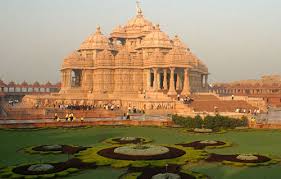
Religion is deeply embedded in the psyche of the Indian people who are a god-fearing society with great reverence for the Almighty till today. This religiosity is amply evident in the countless number of shrines, temples, mosques, gurudwaras, churches, synagogues, etc, that have been built, and are attended by numerous people all across the country.

We, at Indian Holidays, bring you the opportunity to be part of this incredible sense of spirituality through our unique Spiritual Tours of India. These tours can even be undertaken by atheists, agnostics, or even nature lovers, for they entail traveling through some of the most beautiful countryside in India.

In case you want to experience the religious fervor, and witness the enthusiasm and amazing feats accomplished by ardent devotees in the name of God, you could undertake a tour during the peak seasons, at the time of special festivals. But if you want to travel on a quieter and less busy route, you could go off-season, though the experience would definitely be less intense then. In either case, a spiritual tour to any one of India’s pilgrimage sites is sure to be an unforgettable experience. Be sure to make a wish, for who knows, like many of the others’, any one of yours might come true!

Char Dham Yatra

(10 Nights - 11 Days)
Haridwar - Syana Chatti - Yamunotri - Uttarkashi - Gangotri - Rudraprayag - Badrinath

Day 01 : Arrive Delhi On arrival you would be met by the representative of Riche Tourism Travels and transfer to the hotel. Overnight at Delhi

Day 02 : Delhi - Haridwar
Morning after breakfast drive to Hardiwar. On arrival check-into the hotel. Afternoon visit Rishikesh and enjoy Aarti in the evening. Overnight at Haridwar

Day 03 : Haridwar - Syana Chatti (240kms/7Hrs)
Morning after breakfast drive to Syana Chatti via Mussoorie. On arrival check-into the hotel at Syana Chatti. Overnight at Syana Chatti.

Day 04 : Syana Chatti - Yamunotri - Syana Chatti (5 Kms by Road & 13kms Trek -one side)
Morning after breakfast drive to Hanuman Chatti covering a distance of 5 Kms and later trek to Yamunotri and back. Overnight at Syana Chatti.

Day 05 : Syanachatti - Uttarkashi (137 Kms/ 4Hrs)
Morning after breakfast drive to Uttarkashi via Barkot. On arrival check-into the hotel. Overnight at Uttarkashi

Day 06 : Uttarkashi - Gangotri - Uttarkashi (200 Kms/ 7Hrs)
Morning after breakfast drive to Gangotri and visit the Gongotri Temple, Submerged Shivling, Kedar Ganga Sangam and Gaumukh. Later drive back to Uttarkashi. Overnight at Uttarkashi

Day 07 : Uttarkashi - Rudraprayag (175 Kms/ 6 Hrs) Morning after breakfast drive to Rudraprayag and check-into the hotel. After fresh-up visit confluence of river Mandakini and river Alaknanda and temples Rudranath Chamunda Devi, Koteshwar Temple. Overnight at Rudraprayag

Day 08 : Rudraprayag - Kedarnath (75kms by road & 14kms Trek one side)
Morning after breakfast drive to Gaurikund. On arrival trek to Kedarnath. Overnight at Kedarnath

Day 09 : Kedarnath - Rudraprayag (14Kms Down Trek & 75kms /3 Hrs by Road)
Morning after breakfast visit Kedarnath and later trek down to Gaurikund. N arrival drive to Rudraprayag and overnight at Rudraprayag

Day 10 : Rudraprayag / Badrinath (165 Kms/5 Hrs)
Morning after breakfast drive to Badrinath via Joshimath. Overnight at Badrinath

Day 11 : Badrinath / Haridwar (320 Kms/ 9 Hrs)
Morning after breakfast drive to Haridwar enroute visit Srinagar, Devprayag & Rishikesh. On arrival, check into the hotel. Overnight at Haridwar.

Day 12: Haridwar / Delhi
Intime transfer to the Delhi International airport for your flight to onward journey.


Golden Temple Tour
(07 Nights - 08 Days)
Delhi - Chandigarh - Parivar Vichhora - Anandpur Sahib - Chandigarh - Amritsar - Tarn Taran - Gobindwal - Hazoor Sahib - Jalianwala Bagh - Baba Bakala

Punjab's the land of martial traditions where the nation of India rose as one to combat all aggressions from the North - West and all others who dared to challenge the integrity and sovereignty of this golden land. This land of the brave Sikhs echoes with the melodies Gurbani of the sacred Guru Granth Sahib from the beautiful gurudwaras spread all over Punjab. This tour is specially prepared to present the best of the great Sikhs shrines in the region

Day 01 : Arrive Delhi
On arrival to airport Riche Tourism Travels representative would be there to welcome you and transfer to the hotel. Overnight at Delhi

Day 02 : In Delhi
Morning after breakfast visit the famous Gurudwara Bangla Sahib, Gurudwara Sisganj. Gurudwara Rakabganj, Gurudwara Nanak Pio and Gurudwara Moti Bagh. Overnight at Delhi
Day 03 : Delhi - Chandigarh
Morning after breakfast drive to Chandigarh and check-into the hotel. Afternoon visit the Museum, High Court, Assembly Chamber and Rock Garden. Overnight at Chandigarh

Day 04 : Chandigarh - Parivar Vichhora - Anandpur Sahib - Chandigarh
Morning after breakfast visit Parivar Vichorra, Anandpur Sahib. Overnight at Chandigarh
Day 05 : Chandigarh - Amritsar
Morning after breakfast drive to Amritsar renowned for the famous Golden Temple. Amritsar. Overnight at Amritsar
Day 06 : Amritsar - Tarn Taran - Gobindwal - Hazoor Sahib - Amritsar
Morning excursion of Tarn Taran, Gobindwal, Hazoor Sahib. Overnight at Amritsar

Day 07 : Amritsar - Jalianwala Bagh - Baba Bakala - Amritsar
Morning visit Jailianwala Bagh, Baba Bakala. Overnight at Amritsar

Day 08 : Amritsar - Delhi
Morning after breakfast transfer to railway station to board Shatabdi Express. On arrival Riche Tourism Travels representative would meet you and transfer to airport for your flight back home.

Jagannath Darshan Yatra


(07 Nights - 08 Days)
Kolkata - Bhubneswar - Konark - Puri
Day 01 : Arrive Kolkata
On arrival at the airport you would be met by the Riche Tourism Travels representative and transfer to the hotel.

Day 02 : In Kolkata
Morning after breakfast proceed for sightseeing tour with our guide visiting Indian Museum, Victoria Memorial Museum, Fort William and Eden Gardens. Overnight at Kolkata

Day 03 : Kolkata - Bhubneswar
Morning after breakfast transfer to airport to board flight for Bhubneswar. On arrival at the airport Riche Tourism Travels representative would meet you and transfer to the hotel. Afternoon proceed for local sightseeing visiting the Temples. Overnight at Bhubneswar

Day 04 : Bhubaneshwar - Konark - Puri
Morning after breakfast drive to Puri enroute sightseeing of Konark visiting the world famous Sun Temple also known as Black Pagoda. On arrival at Puri check in at hotel. Overnight at Puri

Day 05 : In Puri
Morning after breakfast proceed for full day sightseeing tour of Puri visiting the Mathas, Jagannath Temple, Loknath Temple, Indradyumna Tank, Garden House and beach. Overnight at Puri

Day 06 : Puri - Bhubaneswar
Morning after breakfast drive to Bhubneshwar. On arrival, check in at hotel. Overnight at Bhubaneswar

Day 07 : Bhubneswar - Kolkata
Morning after breakfast transfer to airport connect flight for Kolkata. On arrival check-into the hotel. Overnight at Kolkata

Day 08 : Kolkata - Flight Back Home
Morning after breakfast relax at the hotel. In time transfer to the airport for your flight back home

Kailash Mansarovar Yatra

(17 Nights - 18 Days)
Kathmandu - Nyalam - Saga - Prayang - Darchen - Dirapuk - Zuthulphuk - Mt. Kailash - Maansarovar Lake - Kathmandu

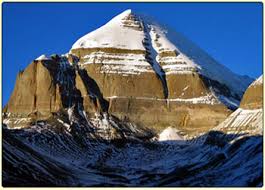
Kailash Mansarovar Yatra for any Hindu across the world is a yatra of lifetime. Mount Kailash is the earthly manifestation of Mt. Meru, their spiritual center of the universe, described as a fanatastic 'world pillar' 84,000 miles high, around which all else revolves, its roots in the lowest hell and its summit kissing the heavens. On the top live their most revered God, Shiva, and his consort Parvati. For the Jains, an Indian religious group, Kailash is the site where their first prophet achieved enlightenment. For the older, more ancient religion of Bon, it is the site where its founder Shanrab is said to have descended from heaven. It was formerly the spiritual centre of Zhang Zung, the ancient Bon Empire that once included all of western Tibet. Bon people walk around the mountain in a counter clockwise manner, unlike the other religions. Over the centuries pilgrims have constantly journeyed immense distances to achieve enlightenment or cleanse themselves of sin, braving enormous distances, particularly harsh weather and bandit attacks.

Day 01 : Arrive Kathmandu
On arrival at the airport Riche Tourism Travels representative would welcome you and transfer to the hotel. Overnight at Kathmandu
Day 02 : In Kathmandu
Morning after breakfast proceed for a full day sightseeing of Kathmandu. Evening meet our experts to update yourself for the tour. Overnight at Kathmandu
Day 03 : Kathmandu - Nylam (3700 m, 180 Kms)
Morning drive to the frontier town of Nepal at Kodari. From here, a short walk to the friendship bridge for the drive on a local available vehicle to Zhangmu, the main entrance of Tibet, China at the height of 2,300 m. which is about 145 kms from Kathmandu. In Zhangmu, you will be received by guide from our Tibetan counterpart. After all the formalities at the check post here, our journey continues for another 35 kms which can take almost 3 hours through the up-winding road to Nyalam with beautiful scenery as the drive brings us for the overnight stay at Nyalam (3,700 m.). The lodges and guesthouses here are very simple and basic. Overnight at Nylam
Day 04 : In Nylam
Rest day for acclimatization and local hikes around. Overnight at Nylam
Day 05 : Nylam - Saga (5050m, 5-6 Hrs drive)
Morning drive to the first pass of Lelung La at 5,050 m. From here a superb view of the high Himalayas can be seen from Gaurishanker, Shisapangma to Langtang Himal. From here the road diverts towards near Shisapangma on the trail to Saga on the absolute windswept landscape on the rough dirt road. Saga, one of the large village enroute to Kailash. The drive can take approximate 5-6 hours depending upon the road condition. We will be camping near the village for the overnight. Overnight at Saga

Day 06 : Saga - Paryang (110 Kms)
Another morning drive through the windswept territory passing many villages and camps of Yak herders with the distance view of snow capped mountains. After 5-6 hours of drive brings us to Paryang for the overnight stay. Overnight at Paryang

Day 07 : Prayang - Darchen
From Paryang, our journey continues to Darchen, the start of our Parikrama or Kora. The drive passes through open territory with a view of distant mountains, Yak herders camp, if lucky you might come across a herd of Kang (Wild Ass). The drive takes us to a high pass of over 5,000 m. before we arrive at Darchen (4,480 m). Darchen is located beneath the majestic holy Mount Kailash, a small village with couple of guest houses. During the auspicious pilgrimage time, this place will be flooded with Pilgrims with hundreds of tents all around. Darchen, the beginning and end point of the Kora. Overnight at Darchen

Day 08 : Darchen - Dirapuk
The first day of our Kora is a gradual walk with multitudes of other local pilgrims chanting and praying. The trail leads us to few ups and downs till we reach our camp at Dirapuk (4,750 m.), after 5-6 hours walk. Camping on the nice grassy meadows with a view of Kailash, northwest face.

Day 09 : Dirapuk - Zuthulphuk
Today our circumbulation (Kora) leads to much higher side of the holy path just beneath the Mount Kailash. The walk will bring us to one of the highest point at Drolma La, 5,200 m. before descending to the gradual field towards Zuthulphuk for the overnight camp after 5-6 hours walk. Zuthulphuk has a small monastery. Overnight at Zuthulphuk

Day 10 : Zuthulphuk - Darchen
The winding gradual tracks finally ends our holy pilgrimage walk (5 hours) at Darchen. Overnight at Darchen.

Day 11 : Darchen - Lake Mansarovar
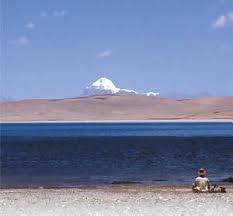
After completing the holy Kora at Darchen, our next spiritual destination takes to Lake Mansarovar for the holy bath. It is believed a ritual bath delivers pilgrims to paradise and drink of its holy water relinquishes the sins of a hundred lifetimes. The drive from Darchen takes a little over 2 hours on the dirt road. Lake Mansarovar, one of the largest salt lake in Tibet. We will be camping at the shore of the lake very close to the monastery and its village. Overnight at Mansarovar

Day 12 : In Mansarover
Rest day at Lake Mansarovar for dip in the Lake and local hikes around. Overnight at Mansarovar

Day 13 : Mansarover - Paryang
Retrace the journey back to Paryang, app. 5-6 hrs. of drive. Overnight at Paryang

Day 14 : Paryang - Saga
Continue drive back to Saga . Overnight at Saga

Day 15 : Saga - Nylam
Drive back to Nylam. Overnight at Nylam

Day 16 : Nylam - Zhangmu - Kathmandu
Drive to Zhangmu and continue towards Kathmandu after the holy memorable journey of a lifetime. Transfer to hotel. Overnight at Kathmandu

Day 17 : In Kathmandu
Free for souvenir shopping and other independent activities. Overnight at Kathmandu

Day 18: Departure Transfer
You would be transferred in time to the International airport for your flight back home